Master's in Event Management On Campus: Why Hands-On Learning Makes the Difference
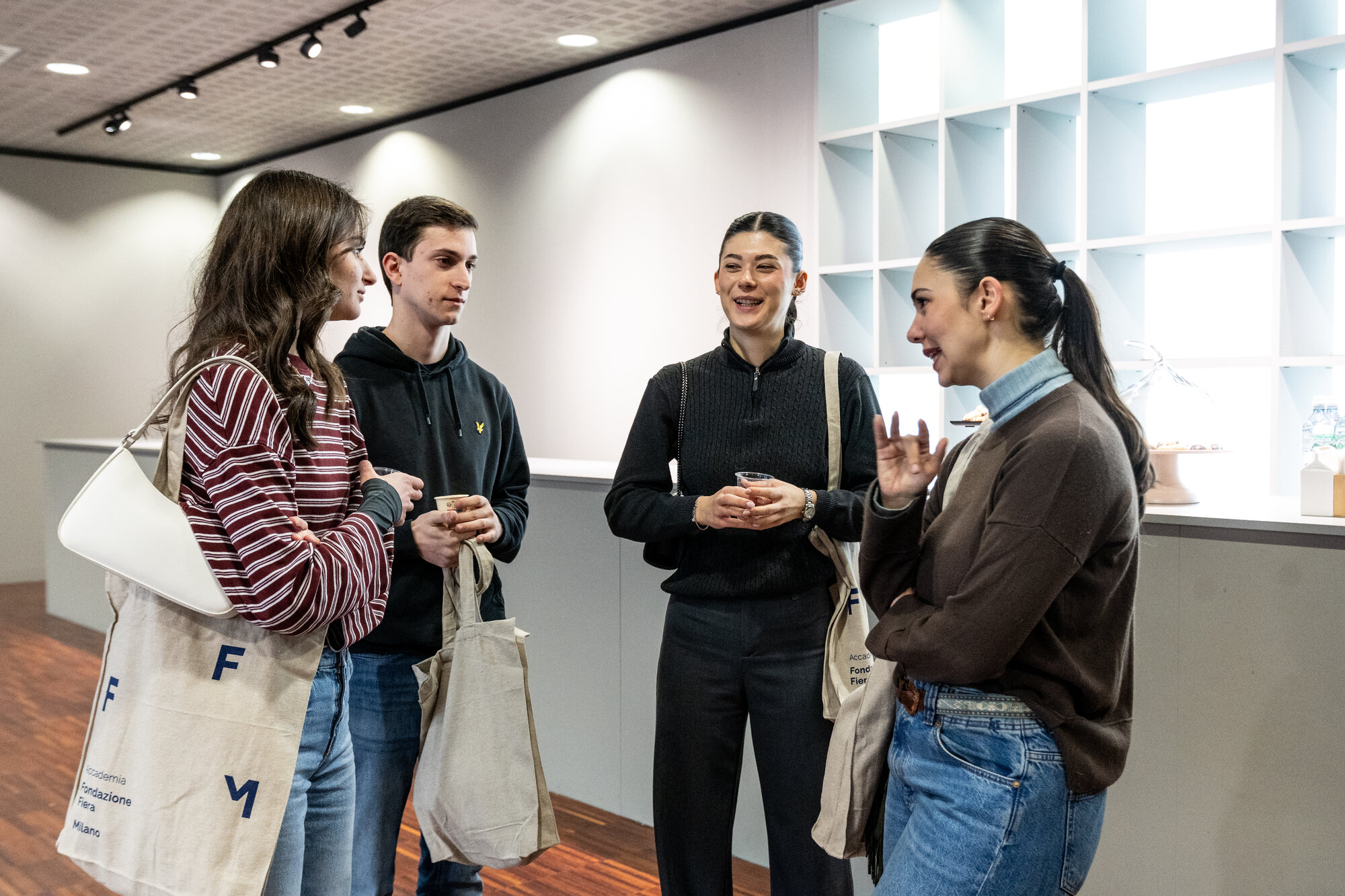
Master's in Event Management On Campus: Why Hands-On Learning Makes the Difference
Between classroom learning, real-world workshops, and company internships, on-campus master's programmes in event management offer direct exposure to the industry that is difficult to replicate online. Here's why hands-on experience remains the defining element of these programmes.
5 august 2026
KEY TAKEAWAYS
- On-campus master's programmes allow students to experience the exhibition and events industry firsthand through site visits, venue inspections, and direct interaction with industry professionals.
- Workshops based on real client briefs, commissioned by companies and organisers of international exhibitions and events, are often among the most valuable and transformative parts of the learning experience.
- The compulsory internship bridges the gap between the classroom and the workplace, offering students the opportunity to gain practical experience and, in many cases, launch their careers through involvement in major international events.
- Milan, one of Europe's leading hubs for trade fairs, fashion, design, and corporate events, provides a unique learning environment that is difficult to replicate anywhere else.
Why In-Person Learning Makes a Difference in Event Management Education
Event management is, by its very nature, a profession that is learned through experience. An on-campus master's programme, with mandatory attendance and an intensive schedule of lectures, practical workshops, and project-based learning, recreates the realities of the professional environment: tight deadlines, teamwork, and continuous interaction with lecturers who are also active industry professionals.
This type of programme requires a genuine full-time commitment, but in return it offers an immersive learning experience that is difficult to replicate through online or distance learning, where face-to-face collaboration, hands-on practice, and exposure to real-world scenarios are inevitably more limited.
The Value of Working on Real Client Briefs
One of the defining features of a practical master's programme, compared with a purely theoretical course, is the opportunity to work on interdisciplinary projects commissioned by organisers of major events and exhibitions.
Guided by experienced lecturers, students develop concrete proposals while experiencing firsthand the role of an event or exhibition manager. They apply the methods learned in the classroom to projects with real clients, clear objectives, deadlines, and practical constraints - gaining invaluable insight into the realities of the profession.
From the Classroom to the Industry: What a Curricular Internship Really Means
After completing the taught component of the programme, students typically undertake a curricular internship with companies operating in the events, exhibition, marketing, or communications sectors. This transition from the classroom to the workplace allows them to put their knowledge into practice while building valuable professional relationships that often become the foundation of their careers.
A compelling example comes from a student on the Master PROGEA programme at Accademia Fiera Milano, who began her internship at Balich Wonder Studio. The company was responsible for the artistic direction and production of the Opening Ceremony of the Milano Cortina 2026 Olympic Winter Games. During her internship, she supported the organisational team with activities related to the event, focusing on institutional relations - a key competence not only for large-scale ceremonies but also for corporate events. On 6 February 2026, she also took part in the Parade of Nations as a placard bearer, experiencing one of the world's most prestigious sporting events from behind the scenes.
Her experience demonstrates how the skills developed through a practical master's programme in event management can be applied across a wide range of contexts - from international live events and ceremonial productions to trade fairs, congresses, conferences, conventions, and corporate roadshows.
Why Study in Milan
Milan is one of Europe's leading hubs for B2B and corporate events, as well as for trade fairs, fashion, design, sport, and culture. Studying in this environment means gaining direct access to international events, leading companies, and an extensive network of industry professionals - an ecosystem that is difficult to match anywhere else in terms of concentration and opportunity.
A Master's Programme Built Around Hands-On Learning
PROGEA, the First-Level University Master's Programme in the Design and Management of Trade Fairs, Events, and Conferences, is offered by Accademia Fiera Milano in partnership with the University of Milan. The programme is delivered entirely on campus, with mandatory attendance, workshops based on real client briefs, and a guaranteed curricular internship for every student.
Over the course of 19 editions, PROGEA has trained nearly 300 professionals, combining academic excellence with practical experience through 250 hours of on-the-job learning integrated into the programme.
Discover PROGEA Master's Programme →
FAQ
Why choose an on-campus master's programme in event management?
Because it offers direct exposure to companies, industry professionals, and real-world projects through classroom learning, practical workshops, and site visits - experiences that are difficult to replicate in an online programme.
What is a workshop in an event management master's programme?
A workshop is a cross-disciplinary project based on a real client brief, commissioned by companies or organisers of international events and exhibitions. Guided by experienced lecturers, students develop practical solutions while applying the knowledge and methodologies acquired throughout the programme.
Does an event management master's programme include an internship?
Yes. The most comprehensive programmes include a curricular internship after the taught component, allowing students to gain professional experience in companies operating across the events, exhibitions, marketing, and communications sectors. It is considered an integral part of the learning experience.
Can you work on major international events after completing an event management master's programme?
Yes. Internships with companies specialising in large-scale event production - including international ceremonies and live events - demonstrate how the practical skills acquired during a hands-on master's programme can be successfully applied in high-profile, global event environments.
Why is Milan a good place to study event management?
Milan is one of Europe's leading hubs for B2B and corporate events, trade fairs, fashion, and design. Studying in the city provides direct access to major industry players, international events, and an extensive network of professionals, creating outstanding opportunities for learning, networking, and career development.